
You are about to supply liquidity to a decentralized exchange from a browser wallet. The interface shows an attractive annualized return, the transaction fee looks manageable, and the protocol appears familiar. Yet the most important question is not whether the button says “Confirm.” It is what that confirmation authorizes, which contract will receive the authority, and what could happen if the interface, token, or transaction data is misleading.
This is the central security problem in decentralized finance: a wallet does not merely hold assets. It mediates instructions between a user and autonomous software deployed on a blockchain. Good dApp integration therefore depends on more than compatibility with Ethereum or another EVM network. It depends on how clearly the interaction is represented, simulated, constrained, and reviewed before execution.
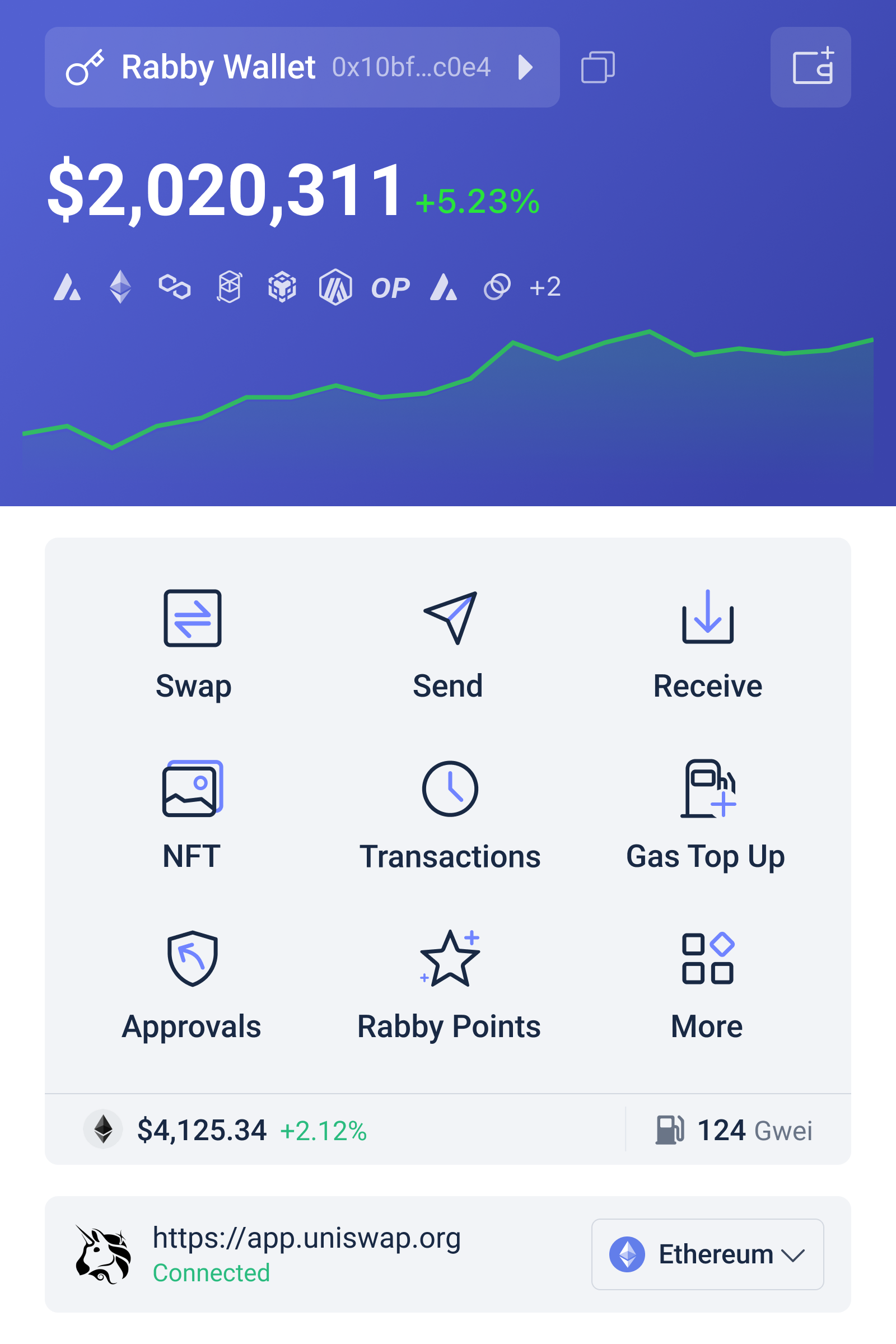
Two Models of dApp Interaction
There are two broad ways users interact with DeFi protocols. In the first, the wallet acts primarily as a signing instrument. The dApp constructs a transaction, the wallet displays a relatively narrow request, and the user approves it. This model can be fast and familiar, but it places substantial responsibility on the dApp interface and on the user’s ability to interpret technical details.
In the second model, the wallet acts as a transaction interpreter and risk-control layer. It can identify the destination contract, decode the intended method, estimate resulting balance changes, and simulate the transaction before the user signs. This does not make a protocol safe by itself, but it changes the decision from “Does this website look legitimate?” to “What state change will this transaction attempt to produce?” That is a materially stronger question.
The distinction matters because smart contracts execute instructions, not intentions. A user may intend to swap one token for another, while the actual transaction grants a contract broad spending permission, routes funds through several contracts, or interacts with a token whose behavior is not obvious from its name. A polished front end can simplify navigation, but it cannot eliminate the underlying complexity.
What Actually Happens During a DeFi Transaction?
Most dApp interactions involve several layers. The dApp prepares a call containing a contract address, a function selector, encoded parameters, gas settings, and sometimes a token approval. The wallet receives that request and asks the user to sign it. The network then validates and executes the call according to the contract’s current state.
Token approvals are a useful example. Before a decentralized exchange can move a user’s tokens, the user may need to authorize a spending contract. An approval can be narrowly limited to a specific amount, or it can permit a contract to spend an effectively unlimited balance. The latter may reduce future prompts, but it also enlarges the impact of a compromised protocol, malicious upgrade, or mistaken contract address.
A swap introduces a different risk. The transaction may specify a minimum amount to receive, a deadline, and a route through one or more pools. If the minimum output is too low, price movement or adverse execution can make the trade economically poor even though the transaction succeeds technically. In other words, “successful” on-chain execution is not equivalent to a favorable result for the user.
Liquidity provision, lending, staking, and bridging add further state changes. Depositing into a vault may issue shares whose value depends on accounting rules. Supplying collateral can expose a user to liquidation if a borrowed position becomes undercollateralized. Bridging can involve contracts on both the source and destination networks, creating operational and trust assumptions that are not visible in a single confirmation window.
Comparison: Convenience, Visibility, and Control
Interface-first interaction
The interface-first approach is efficient when the protocol is well understood and the transaction is routine. It minimizes friction and can make sophisticated applications approachable to non-specialists. Its weakness is that visual simplicity may conceal authority. A green button, familiar logo, or expected token symbol does not prove that the destination address and parameters are correct.
This model is particularly fragile when users arrive through search results, advertisements, social media posts, or copied links. A counterfeit website can reproduce the appearance of a legitimate dApp while requesting a different approval or directing the wallet to an attacker-controlled contract. The interface is then being used as evidence when it should be treated only as a request generator.
Wallet-mediated verification
A wallet-centered approach adds an independent review layer. Transaction simulation can show expected balance changes before broadcasting, while contract and token warnings can highlight suspicious destinations, unusual approvals, or interactions that differ from the user’s apparent objective. For users evaluating a rabby wallet as an advanced EVM wallet, these features are most valuable when they support deliberate verification rather than encourage automatic acceptance.
The trade-off is added interpretation. Simulations can be difficult to understand when a transaction involves multiple contracts, wrapped assets, or protocol-specific accounting. A simulation also represents a particular state at a particular moment. Pending transactions, changing prices, block ordering, oracle updates, and contract conditions can alter the result before execution. Simulation is therefore evidence about likely consequences, not a guarantee.
Manual contract interaction
Direct interaction with a contract can provide maximum control for experienced users. It may be appropriate when an interface is unavailable or when a user needs to call a specific method with carefully chosen parameters. But it is also the least forgiving approach. Function names and hexadecimal arguments do not communicate economic intent well, and a technically valid call may still be harmful.
The best practical arrangement is not to choose one model universally. Use a friendly interface for discovery and routine actions, use wallet-level decoding and simulation for verification, and reserve direct contract calls for situations where the user understands the method, parameters, permissions, and expected state transition.
Why Simulation Helps—and Where It Breaks
Simulation is often misunderstood as a security verdict. Mechanically, it is closer to a rehearsal: the proposed call is evaluated against an available representation of blockchain state to estimate whether it will revert and what balances or positions may change. This can expose failed transactions, unexpected token transfers, or a mismatch between the dApp’s description and the transaction’s likely result.
That makes simulation especially useful for detecting a category of errors that ordinary warnings may miss. A site may not look obviously malicious, yet its transaction could transfer an unexpected asset, approve an unfamiliar spender, or produce a result inconsistent with the user’s stated goal. A simulated outcome gives the user a chance to stop before paying network fees or granting authority.
Its boundary conditions are equally important. A simulation cannot reliably establish that a protocol’s governance is honest, that an upgrade will not change the contract later, or that a token’s market value is sound. It may also fail to capture effects dependent on future block conditions, miner or validator ordering, external prices, oracle updates, or transactions that execute first. A clean simulation should reduce uncertainty, not erase it.
This leads to a sharper security principle: review both the transaction and the permission it creates. A swap with reasonable expected output can still leave an excessive approval active. Conversely, a limited approval may reduce long-term exposure even when the immediate trade is routine. The user’s risk is determined not only by what leaves the wallet now, but also by what another contract may be allowed to do later.
A Reusable Risk-Management Framework
Before approving an unfamiliar DeFi interaction, examine four dimensions: identity, authority, outcome, and reversibility. Identity asks whether the destination contract and network are the ones intended. Authority asks what the transaction permits, including token allowances and administrative privileges. Outcome asks which assets, balances, or positions are expected to change. Reversibility asks what can be recovered if the protocol, interface, or assumption proves wrong.
These dimensions produce a practical comparison between two transactions that might look equally ordinary in a dApp interface. A limited approval followed by a small swap on a known network has narrower authority and a more observable outcome. An unlimited approval followed by a deposit into an upgradeable vault has broader authority, more complex accounting, and greater dependence on governance and contract design. The second transaction may still be rational, but it deserves a higher verification threshold.
Operational discipline matters as much as software features. Use a separate wallet for experimentation, keep only the amount needed for a high-risk interaction in a hot wallet, and review or revoke old allowances when they are no longer necessary. Hardware signing can protect private keys, but it cannot make a malicious transaction beneficial; a secure signature on a harmful instruction remains harmful.
What US DeFi Users Should Watch Next
The likely direction of dApp integration is toward richer transaction interpretation: wallets that present intent, permissions, expected state changes, and protocol dependencies in one review flow. If those systems become more accurate and understandable, users may be able to evaluate complex DeFi positions without reading raw calldata. The unresolved challenge is whether increasingly automated warnings will remain explainable enough for users to distinguish a genuine risk from a merely unfamiliar transaction.
That question is especially relevant in the United States, where users often move between multiple EVM networks, centralized on-ramps, decentralized protocols, and tax or accounting workflows. Network selection, token identity, and transaction history can become operational risks even when the underlying contract is legitimate. A wallet that helps users see the complete context may reduce mistakes, but it cannot substitute for understanding custody, protocol exposure, and applicable obligations.
Frequently Asked Questions
Does transaction simulation prove that a DeFi transaction is safe?
No. Simulation can reveal likely execution results, failed calls, and unexpected balance changes, but it depends on available blockchain state and assumptions about future execution. It does not prove that the protocol is honest, that an upgrade will not alter behavior, or that the received asset has stable value.
Why are token approvals a major smart-contract risk?
An approval gives a spender permission to move specified tokens from a user’s wallet. If the allowance is excessive or the spender is compromised, the potential loss can exceed the amount involved in the immediate transaction. Limiting approvals and reviewing stale allowances narrows that exposure.
Should advanced users interact directly with contracts?
Direct calls can be appropriate when the method, parameters, destination, and expected state change are well understood. They should not be treated as inherently safer than a dApp interface. For most users, a recognizable interface combined with independent wallet decoding and simulation provides a more practical balance between control and usability.
The durable lesson is simple but easy to neglect: DeFi security is not primarily about recognizing good-looking websites. It is about comparing intended actions with actual permissions and expected state changes. The strongest wallet workflow is therefore not the one that removes every prompt. It is the one that makes consequential prompts understandable before the signature becomes irreversible.
